$20.00Original price was: $20.00.$12.97Current price is: $12.97.
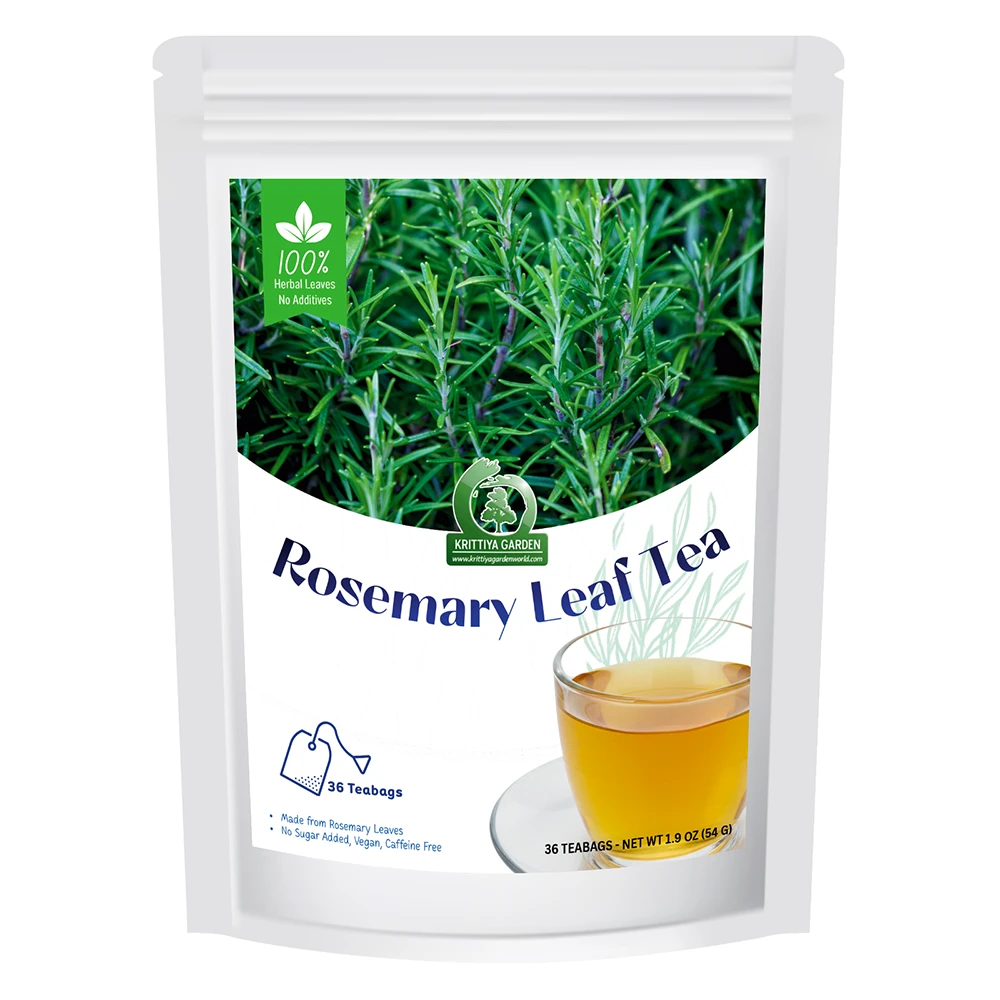
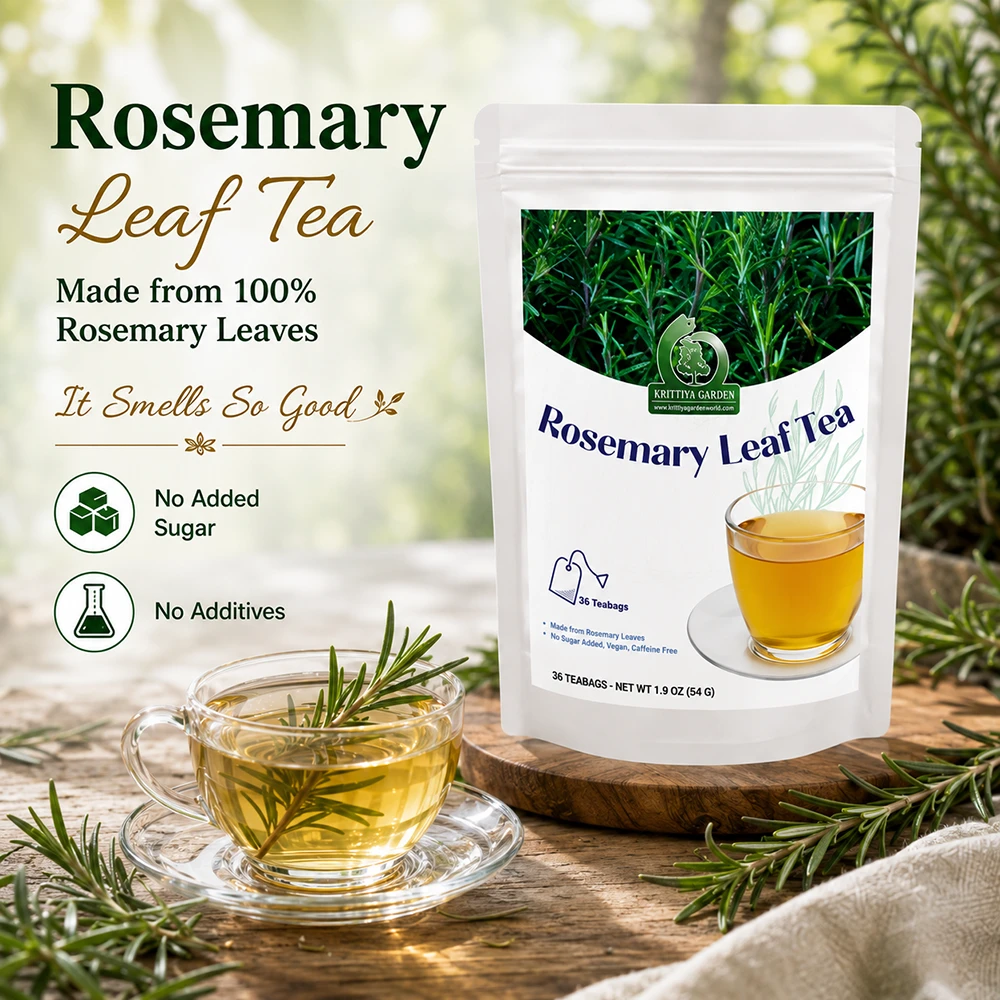
Discover the unmistakable aroma of Rosemary Leaf Tea, crafted from carefully selected rosemary leaves (Salvia rosmarinus). Naturally caffeine-free with a fresh, pine-like, herbaceous and gently warming character, it transforms one of the world’s most celebrated aromatic herbs into a distinctive botanical tea ritual.
Rosemary Leaf Tea — An Aromatic Herb, Reimagined in Your Cup
You may know Rosemary from the kitchen.
Now discover it in an entirely different way.
Krittiya Garden Rosemary Leaf Tea transforms the distinctive leaves of rosemary into an aromatic botanical infusion — fresh, herbaceous, gently warming and naturally caffeine-free.
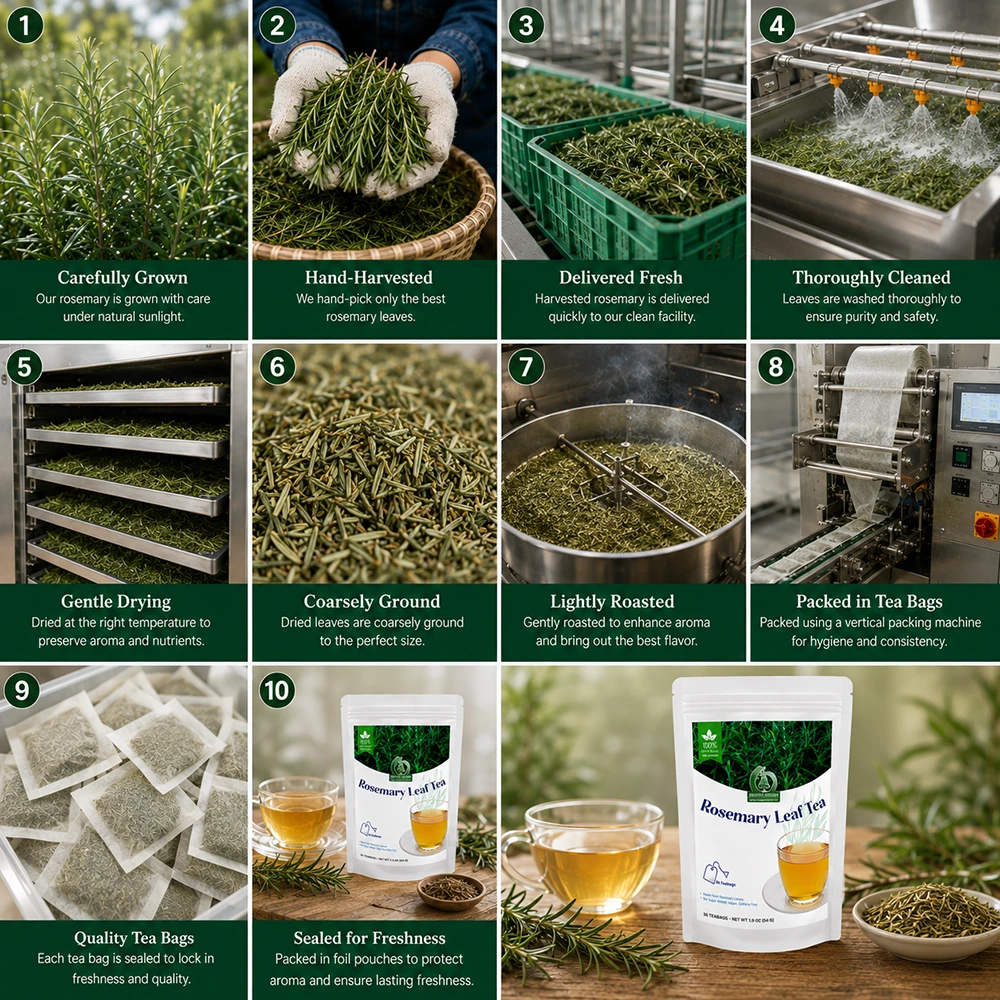
Carefully prepared and conveniently packed into 36 individual tea bags, it offers a simple way to experience the unmistakable character of rosemary beyond its familiar culinary role.
Just hot water, aromatic leaves and a few quiet minutes.
What Is Rosemary Tea?
Rosemary Tea is an herbal infusion prepared from the leaves of the rosemary plant.
The currently accepted botanical name is Salvia rosmarinus, while the older name Rosmarinus officinalis remains widely recognised and appears frequently in scientific and botanical literature.
Rosemary belongs to the Lamiaceae, or mint family, alongside many other aromatic herbs.
Native to the Mediterranean region, rosemary has been valued for centuries as a culinary and aromatic botanical and has become familiar in cultures around the world.
Botanical Information
Common Name: Rosemary Botanical Name:Salvia rosmarinus Synonym:Rosmarinus officinalis Family: Lamiaceae Plant Part Used: Leaves Product Type: Herbal Infusion
What Does Rosemary Tea Taste Like?
Rosemary is one of the world’s most recognisable aromatic herbs.
When brewed as an herbal infusion, it produces a distinctive character that can be described as:
Unlike conventional tea, the experience of Rosemary Tea is strongly driven by its aroma.
For a lighter cup, use a shorter brewing time. For a deeper herbal character, allow the leaves to infuse slightly longer.
Naturally Caffeine-Free
Pure Rosemary Leaf Tea is naturally caffeine-free because rosemary is not the conventional tea plant Camellia sinensis.
It therefore offers an aromatic botanical alternative to traditional black, green and oolong teas.
From Mediterranean Herb to Botanical Tea
Rosemary is deeply associated with Mediterranean culinary traditions, but its botanical story extends well beyond cooking.
The leaves naturally contain a complex mixture of plant constituents, including phenolic compounds and volatile aromatic compounds.
Compounds identified and investigated in rosemary include rosmarinic acid, carnosic acid, carnosol and various volatile constituents.
These compounds contribute to the scientific interest surrounding rosemary and, in different ways, to its botanical characteristics.
Rosemary & Modern Scientific Research
Rosemary has been extensively investigated in laboratory and preclinical research for a range of biological properties.
Its naturally occurring phenolic constituents, particularly compounds such as rosmarinic acid and carnosic acid, have attracted substantial scientific attention.
Research has explored rosemary preparations in areas including antioxidant activity, cognition, metabolism and other biological functions.
However, there is an important distinction between:
Results obtained using concentrated rosemary extracts, essential oils, isolated compounds, laboratory experiments or animal models should not automatically be interpreted as evidence that an ordinary cup of Rosemary Leaf Tea produces the same effect.
Krittiya Garden therefore presents Rosemary Leaf Tea as an aromatic botanical beverage, rather than a treatment for any medical condition.
Why Choose Krittiya Garden Rosemary Leaf Tea?
Made from carefully selected Rosemary Leaves
Salvia rosmarinus
Naturally caffeine-free
Distinctive aromatic botanical character
Convenient individual tea bags
No added colours*
No artificial flavourings*
Enjoy hot or iced
36 tea bags per pack
Crafted in Thailand
Beyond the Kitchen
Rosemary is familiar.
But familiarity can hide another experience waiting to be discovered.
Away from the kitchen, rosemary becomes something quieter — an aromatic infusion where warm water releases the naturally fresh and herbaceous character of its leaves.
6 reviews for Rosemary Leaf Tea 36 Herbal Tea Bags
Rated 5 out of 5
Annette Sherrer Verified Purchase–
Delicious! Great rosemary taste. Satisfied with purchase.
Helpful?
0
0
Rated 5 out of 5
Kristie Pierce Verified Purchase–
Great taste, good quality will order again.
Helpful?
0
0
Rated 5 out of 5
Dolores1 Verified Purchase–
I didn’t like the idea of buying rosemary tea, but they said they’re it’s really good for your body and actually tastes very good. I drink it every day.
Helpful?
0
0
Rated 4 out of 5
Amazing product. I’m on auto ship so I never miss a day Verified Purchase–
Great flavor and true to its name
Helpful?
0
0
Rated 5 out of 5
Susan B. Cladd Verified Purchase–
This is an all natural herb tea that can be mixed with your favorite herb tea’s. I mix it with turmeric tea.
Helpful?
0
0
Rated 4 out of 5
mike wright Verified Purchase–
Taste is nice but I have to use 2 bags for one cup of tea.
Carefully selected rosemary leaves prepared and packed into convenient individual tea bags for a naturally aromatic botanical infusion.
Product Features
Rosemary Leaves
Salvia rosmarinus
Naturally caffeine-free
Plant-based herbal infusion
No added colours*
No artificial flavourings*
No added sugar*
Convenient individual tea bags
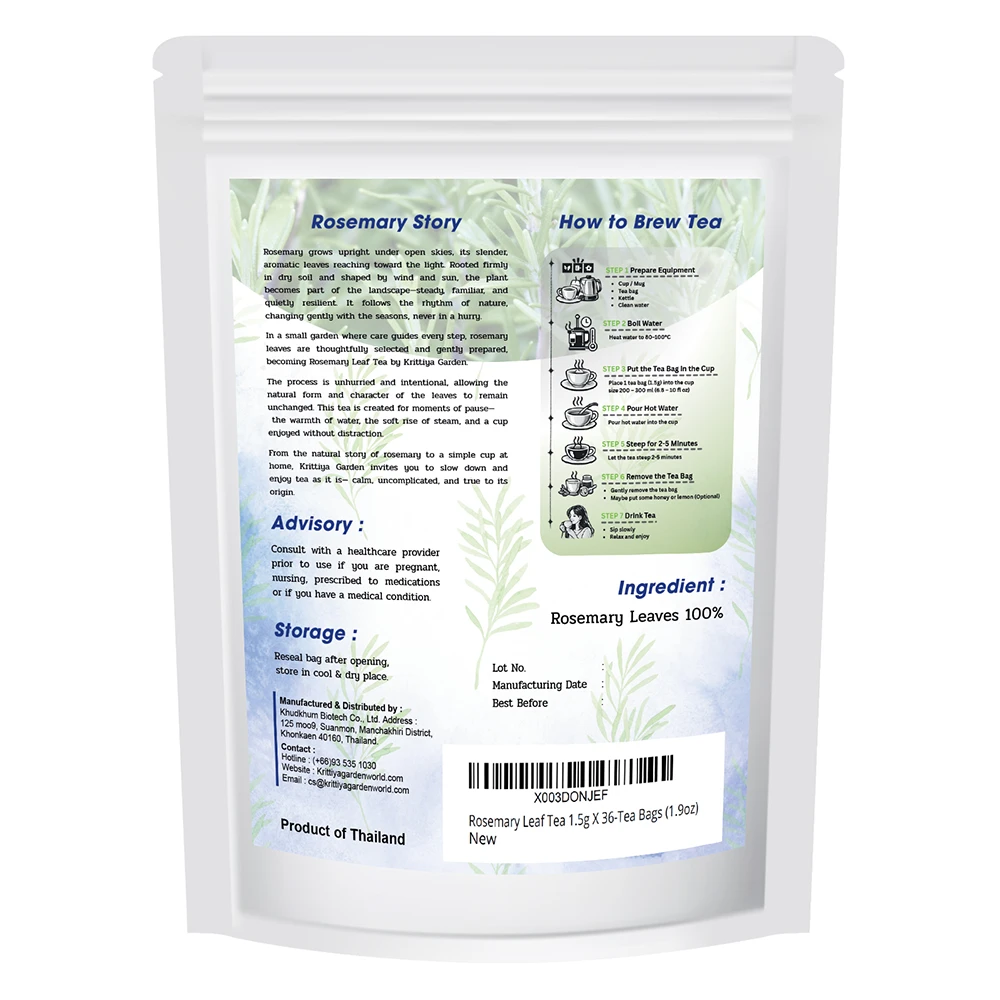
Contents: 36 Tea Bags Tea Bag Weight: 1.5g each Net Weight: 54g Product of Thailand*
Botanical Information
Common Name: Rosemary Botanical Name:Salvia rosmarinus Synonym:Rosmarinus officinalis Family: Lamiaceae Plant Part Used: Leaves
Rosemary leaves naturally contain a variety of phenolic and aromatic plant compounds. Their precise composition varies according to cultivar, growing conditions, harvesting, drying and processing.
How to Brew Rosemary Leaf Tea
Hot Rosemary Tea
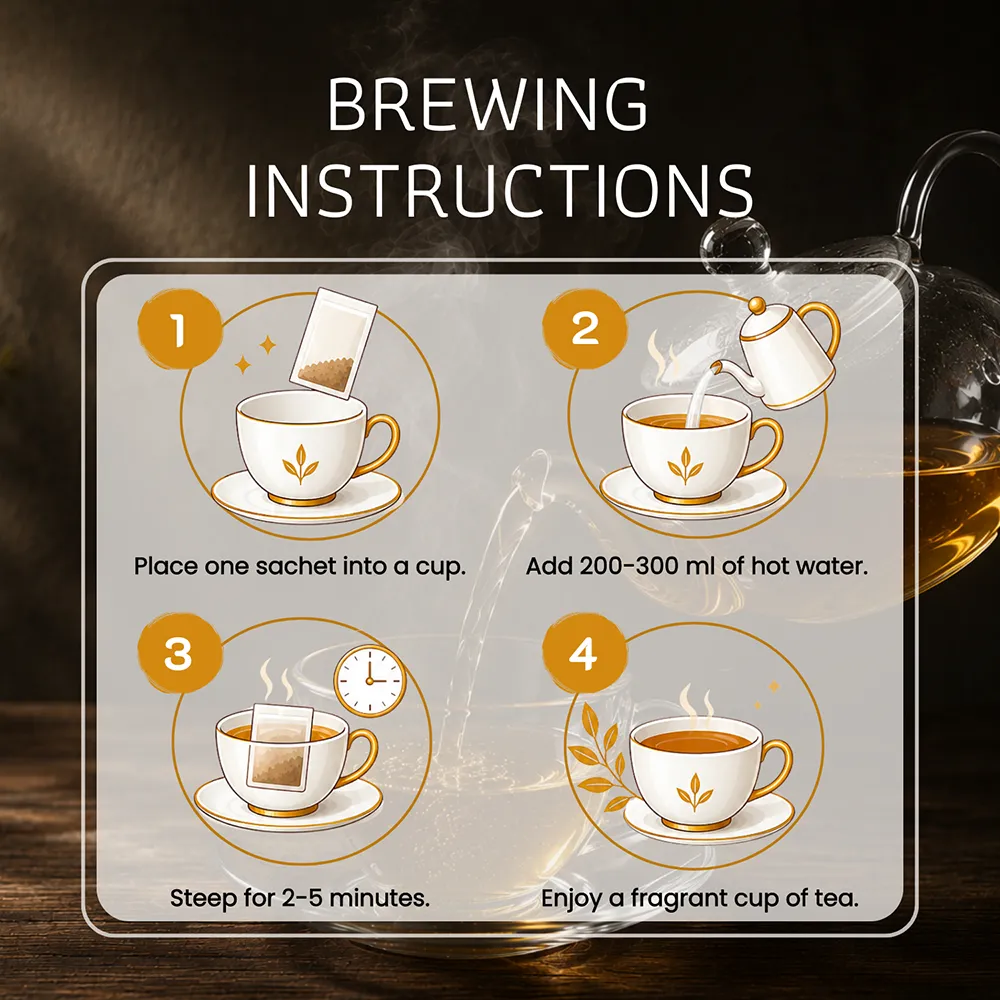
1. Place one tea bag in a cup Use one Rosemary Leaf Tea bag per serving.
2. Add hot water Pour approximately 200–250 ml (7–8 fl oz) of hot water over the tea bag.
3. Steep for 3–5 minutes Allow the aromatic character of the rosemary leaves to develop.
4. Adjust to your taste For a lighter, fresher cup, use a shorter steeping time. For a deeper and more herbaceous flavour, steep slightly longer.
5. Remove the tea bag and enjoy Enjoy warm on its own or adjust according to your personal preference.
Serving Suggestions
Rosemary's aromatic character pairs particularly well with:
Lemon • Honey • Fresh Citrus
A small slice of lemon can create a brighter and more refreshing cup.
Iced Rosemary Tea
Brew slightly stronger than usual, allow the infusion to cool and serve over ice.
Add fresh lemon according to preference for a refreshing botanical drink.
Brewing Tip
Rosemary is naturally aromatic and can become quite intense when over-brewed.
If you are trying Rosemary Tea for the first time, begin with a shorter steep and gradually increase the brewing time according to your preferred flavour.
Frequently Asked Questions
What is Rosemary Leaf Tea? Rosemary Leaf Tea is an herbal infusion prepared from the leaves of rosemary, botanically known as Salvia rosmarinus.
Is Rosmarinus officinalis the same as Salvia rosmarinus? Yes. Rosmarinus officinalis is the older botanical name still commonly encountered in scientific and commercial literature. Rosemary is now generally classified as Salvia rosmarinus.
Is Rosemary Tea made from the same rosemary used for cooking? It comes from the same botanical species commonly known as rosemary. However, products intended for brewing should be prepared and handled specifically as food ingredients according to applicable standards.
What does Rosemary Tea taste like? Rosemary Tea has a distinctive aromatic, herbaceous, pine-like and gently bitter flavour with a warm botanical finish.
Does Rosemary Tea contain caffeine? Pure Rosemary Leaf Tea is naturally caffeine-free because it does not contain conventional tea leaves from Camellia sinensis.
How many tea bags are included? Each package contains 36 individual tea bags.
How do I brew Rosemary Tea? Steep one tea bag in approximately 200–250 ml of hot water for around 3–5 minutes, or follow the preparation instructions on the final packaging.
Can Rosemary Tea be served cold? Yes. Brew it slightly stronger, allow it to cool and serve over ice. Lemon pairs particularly well with its aromatic herbal character.
What natural compounds are found in rosemary leaves? Rosemary contains numerous naturally occurring compounds. Frequently studied constituents include rosmarinic acid, carnosic acid, carnosol and various aromatic volatile compounds. Their amounts vary considerably depending on the plant and processing method.
Does Rosemary Tea contain antioxidants? Rosemary contains phenolic compounds that demonstrate antioxidant activity in experimental research. However, laboratory antioxidant activity should not automatically be interpreted as a specific clinical benefit from drinking a cup of Rosemary Tea.
Is Rosemary Tea good for memory and concentration? Rosemary and some rosemary preparations or aromas have been investigated in research involving cognition and memory. However, the type of preparation, dose and route of exposure vary substantially between studies. This does not establish that ordinary Rosemary Leaf Tea improves memory or treats cognitive impairment.
Does Rosemary Tea help with hair growth? Rosemary's association with hair growth largely involves research and marketing around topical rosemary preparations, particularly rosemary oil. This evidence should not be applied to drinking Rosemary Leaf Tea.
Does Rosemary Tea help with weight loss or blood sugar? Rosemary extracts and compounds have been investigated in metabolic research, but findings from concentrated extracts, laboratory studies or animal models do not establish that ordinary Rosemary Tea causes weight loss or treats diabetes.
Can I drink Rosemary Tea every day? Follow the serving directions on the product packaging. Food-level culinary exposure and regular consumption of concentrated herbal preparations should not be assumed to be equivalent, and more is not necessarily better.
Can pregnant women drink Rosemary Tea? Culinary use of rosemary and regular medicinal-style consumption of concentrated rosemary preparations are different exposures. Because pregnancy requires additional caution with herbal products, pregnant customers should consult an appropriate healthcare professional before regularly consuming rosemary as a concentrated herbal infusion.
Can I drink Rosemary Tea while taking medication? If you take prescription medication, have an existing medical condition or intend to consume herbal preparations regularly for a health purpose, consult an appropriate healthcare professional.
Is Rosemary Tea the same as Rosemary Essential Oil? No. This distinction is very important. Rosemary Tea is a water-based infusion of the leaves, whereas rosemary essential oil is a highly concentrated volatile preparation. Rosemary essential oil should not be treated as interchangeable with Rosemary Tea.
Is Krittiya Garden Rosemary Leaf Tea a medicine? No. It is offered as a botanical herbal beverage and is not intended to diagnose, treat, cure or prevent disease.
How should I store Rosemary Leaf Tea? Store in a cool, dry place away from direct sunlight, heat and moisture. Keep the package tightly sealed to help preserve its natural aroma.
I didn’t like the idea of buying rosemary tea, but they said they’re it’s really good for your body and actually tastes very good. I drink it every day.
Susan B. Cladd
This is an all natural herb tea that can be mixed with your favorite herb tea’s. I mix it with turmeric tea.
Annette Sherrer
Delicious! Great rosemary taste. Satisfied with purchase.











Annette Sherrer Verified Purchase –
Delicious! Great rosemary taste. Satisfied with purchase.
Kristie Pierce Verified Purchase –
Great taste, good quality will order again.
Dolores1 Verified Purchase –
I didn’t like the idea of buying rosemary tea, but they said they’re it’s really good for your body and actually tastes very good. I drink it every day.
Amazing product. I’m on auto ship so I never miss a day Verified Purchase –
Great flavor and true to its name
Susan B. Cladd Verified Purchase –
This is an all natural herb tea that can be mixed with your favorite herb tea’s. I mix it with turmeric tea.
mike wright Verified Purchase –
Taste is nice but I have to use 2 bags for one cup of tea.