Description
Holy Basil Tea — An Aromatic Botanical Tradition
Discover the distinctive aroma of Holy Basil Tea, also widely known as Tulsi Tea.
Crafted from carefully selected holy basil leaves, Krittiya Garden Holy Basil Tea transforms this celebrated Asian botanical into a convenient herbal infusion for modern everyday life.
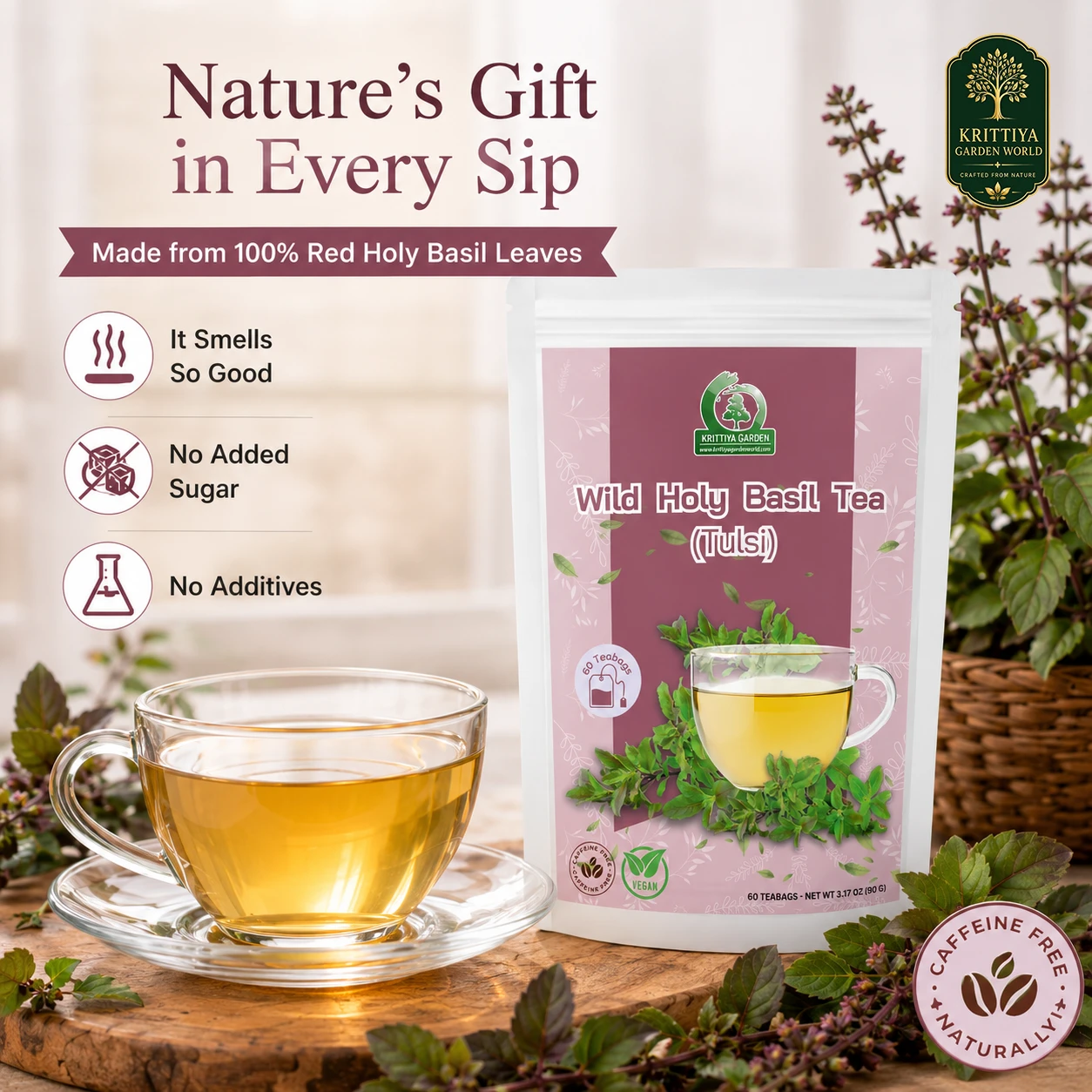
Naturally caffeine-free and beautifully aromatic, Holy Basil offers a flavour unlike conventional tea — herbal, warm, gently spicy and unmistakably botanical.
Whether enjoyed as a quiet morning ritual or a warm caffeine-free cup later in the day, it offers a simple way to experience an ingredient deeply connected with Asian botanical heritage.
What Is Holy Basil?
Holy Basil is an aromatic plant in the mint family Lamiaceae.
Its accepted botanical name is Ocimum tenuiflorum, while Ocimum sanctum is a botanical synonym still commonly encountered in traditional and scientific literature.
The plant is widely known as Tulsi, particularly in India, where it has considerable cultural and traditional significance.
Botanical Information
Common Name: Holy Basil
Also Known As: Tulsi
Botanical Name: Ocimum tenuiflorum
Synonym: Ocimum sanctum
Family: Lamiaceae
Plant Part Used: Leaves*
Product Type: Herbal Infusion
Holy Basil vs Thai Basil — Are They the Same?
No.
This is particularly important for an international Product Page.
Holy Basil (Tulsi) generally refers to Ocimum tenuiflorum.
It should not be confused with Thai basil, which is generally Ocimum basilicum var. thyrsiflora and has a different aroma, culinary profile and botanical identity.
Holy basil is also known in Thailand as กะเพรา (Kaphrao/Kaprao).
What Does Holy Basil Tea Taste Like?
Holy Basil has a complex aromatic character.
A freshly brewed cup can be described as:
Herbal • Aromatic • Warm • Gently Spicy • Slightly Peppery • Refreshing
Unlike conventional black or green tea, its character comes entirely from the aromatic plant itself.
Brewing strength can easily be adjusted according to preference.
Naturally Caffeine-Free
Pure Holy Basil Tea is naturally caffeine-free because it is not made from the conventional tea plant Camellia sinensis.
This makes it an interesting choice for people who want to explore aromatic herbal infusions without conventional tea caffeine.
From Traditional Knowledge to Modern Research
Holy basil has a long history within South and Southeast Asian traditional practices and is particularly prominent in Ayurvedic traditions.
Modern research has investigated Ocimum tenuiflorum for its phytochemical composition and a variety of potential biological activities.
Holy basil contains numerous naturally occurring constituents, including phenolic compounds, flavonoids and volatile aromatic compounds. The precise composition varies with cultivar, growing conditions, plant part and processing method.
Research has explored Holy Basil preparations in areas including stress-related outcomes, glucose metabolism and other aspects of health.
However, evidence involving concentrated extracts, particular doses or specific study preparations should not automatically be interpreted as evidence that an ordinary cup of Holy Basil Tea produces the same effects.
Krittiya Garden therefore presents Holy Basil Tea as a botanical herbal beverage, rather than a treatment for stress, diabetes or other medical conditions.
Traditional knowledge deserves respect. Scientific evidence deserves precision.
Why Choose Krittiya Garden Holy Basil Tea?
- Made with carefully selected Holy Basil
- Also known internationally as Tulsi
- Naturally caffeine-free
- Distinctive aromatic botanical character
- No added colours*
- No added flavourings*
- Convenient individual tea bags
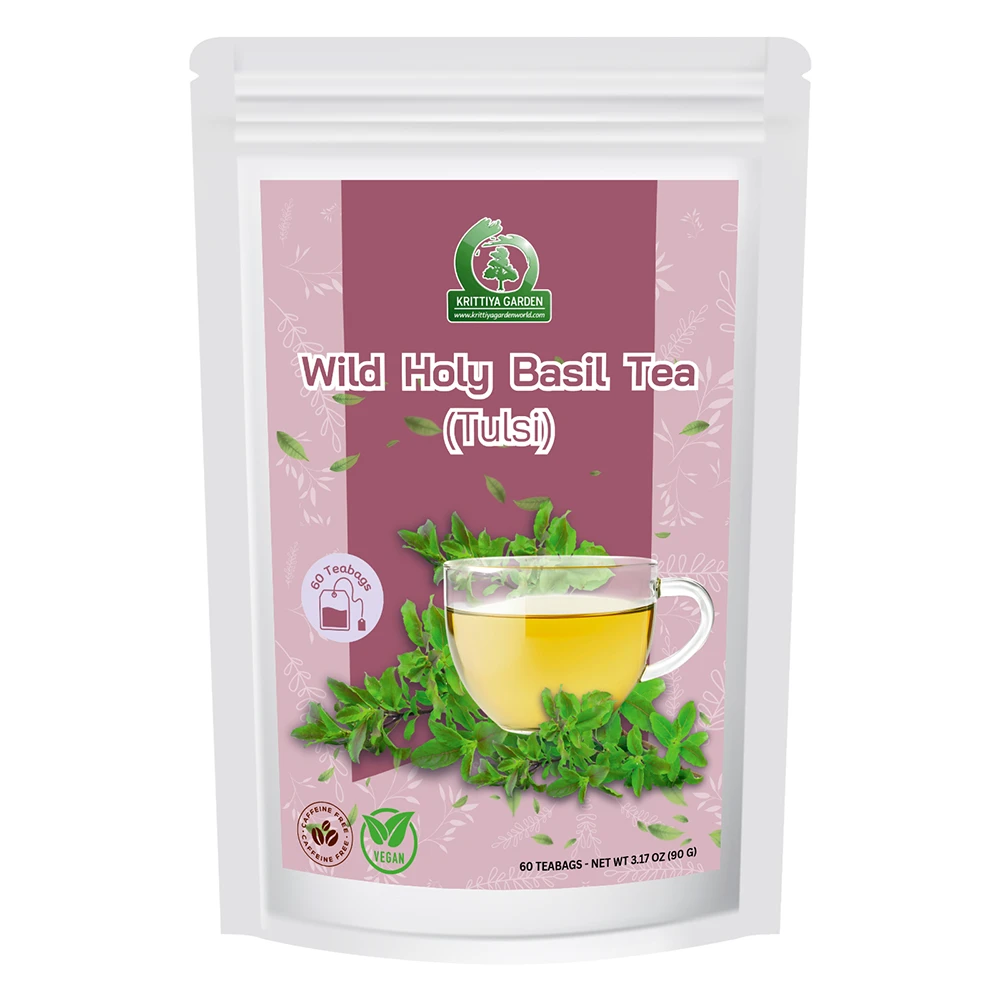
- 60 tea bags per pack
- Crafted in Thailand
From Thailand, With Botanical Heritage
For Thai people, holy basil is an instantly familiar plant.
But beyond its place in Thai cuisine lies a broader botanical story shared across Asian cultures.
Krittiya Garden brings that story into a different experience — not as a culinary dish, but as a warm, aromatic botanical infusion.
Steep a cup. Experience the aroma. Discover another side of Thai holy basil.
KRITTIYA GARDEN — CRAFTED FROM NATURE
Ingredients
Holy Basil (Tulsi) Leaves (Ocimum tenuiflorum)*
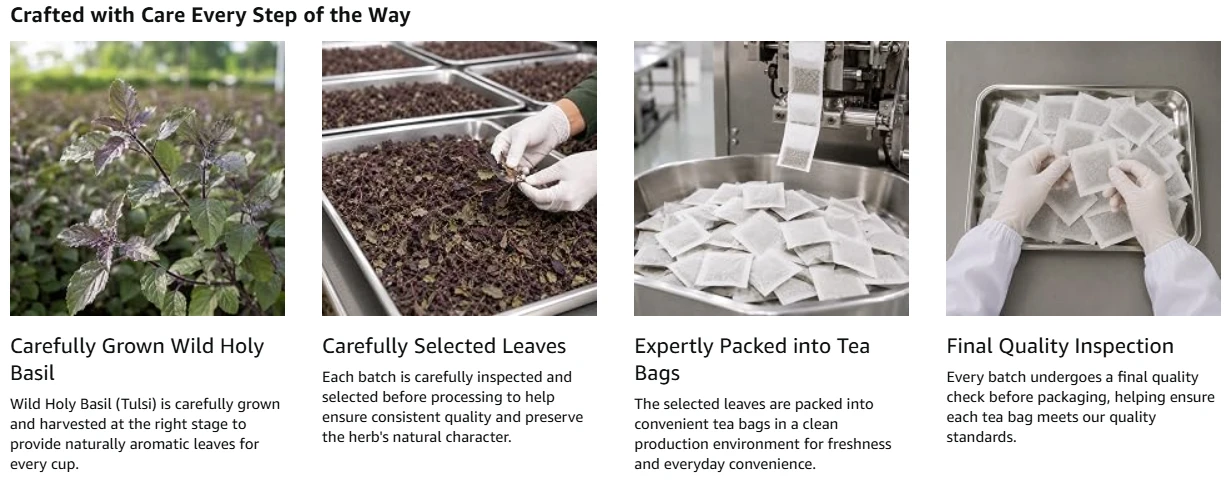
Carefully selected Holy Basil leaves prepared and packed into convenient individual tea bags for an aromatic botanical infusion.
Product Features
- Holy Basil / Tulsi
- Ocimum tenuiflorum
- Naturally caffeine-free
- Plant-based herbal infusion
- No added colours*
- No added flavourings*
- No added sugar*
- Convenient individual tea bags
Contents: 60 tea bags
Tea Bag Weight: 1.5g each
Net Weight: 90g
Product of Thailand
Botanical Information
Common Name: Holy Basil
Also Known As: Tulsi, Kaphrao / Kaprao
Botanical Name: Ocimum tenuiflorum
Botanical Synonym: Ocimum sanctum
Family: Lamiaceae
Plant Part Used: Leaves
Holy basil naturally contains a complex mixture of aromatic and phenolic plant compounds. The precise phytochemical profile can vary according to plant variety, growing conditions, harvest and processing.
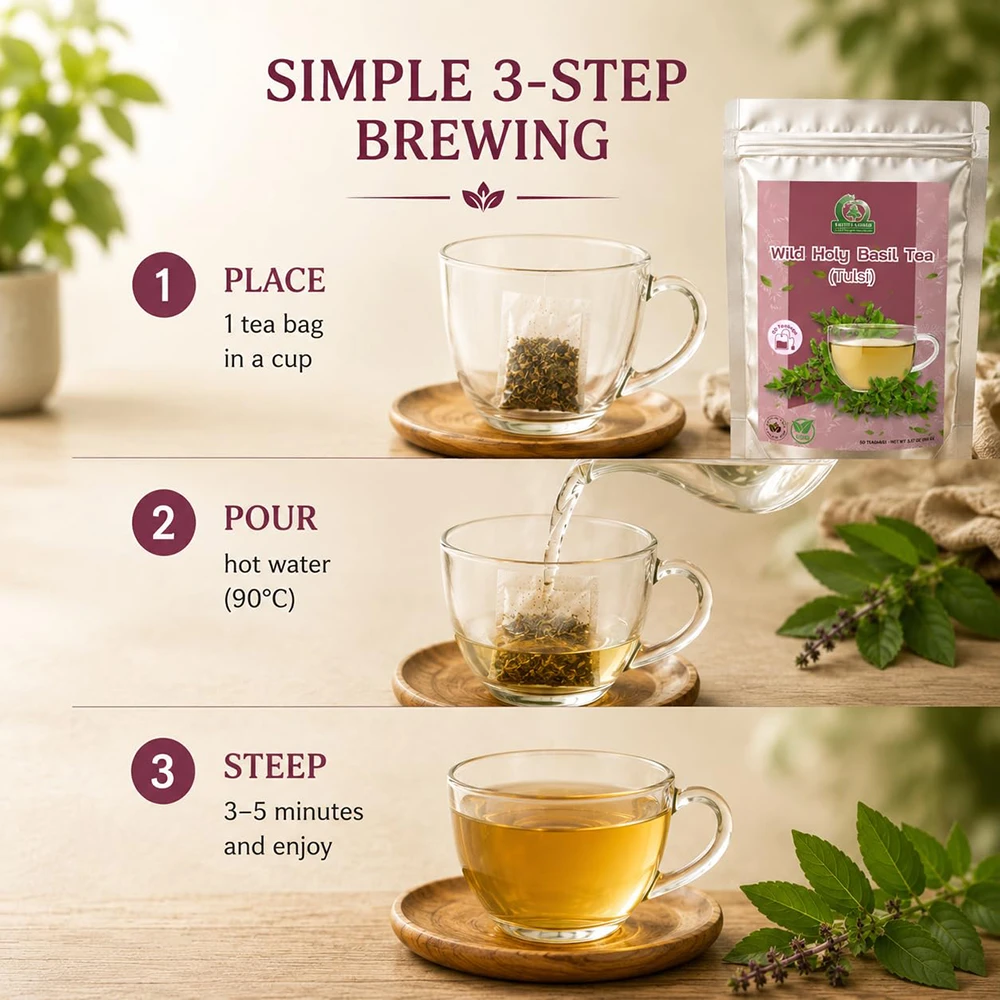
How to Brew Holy Basil Tea
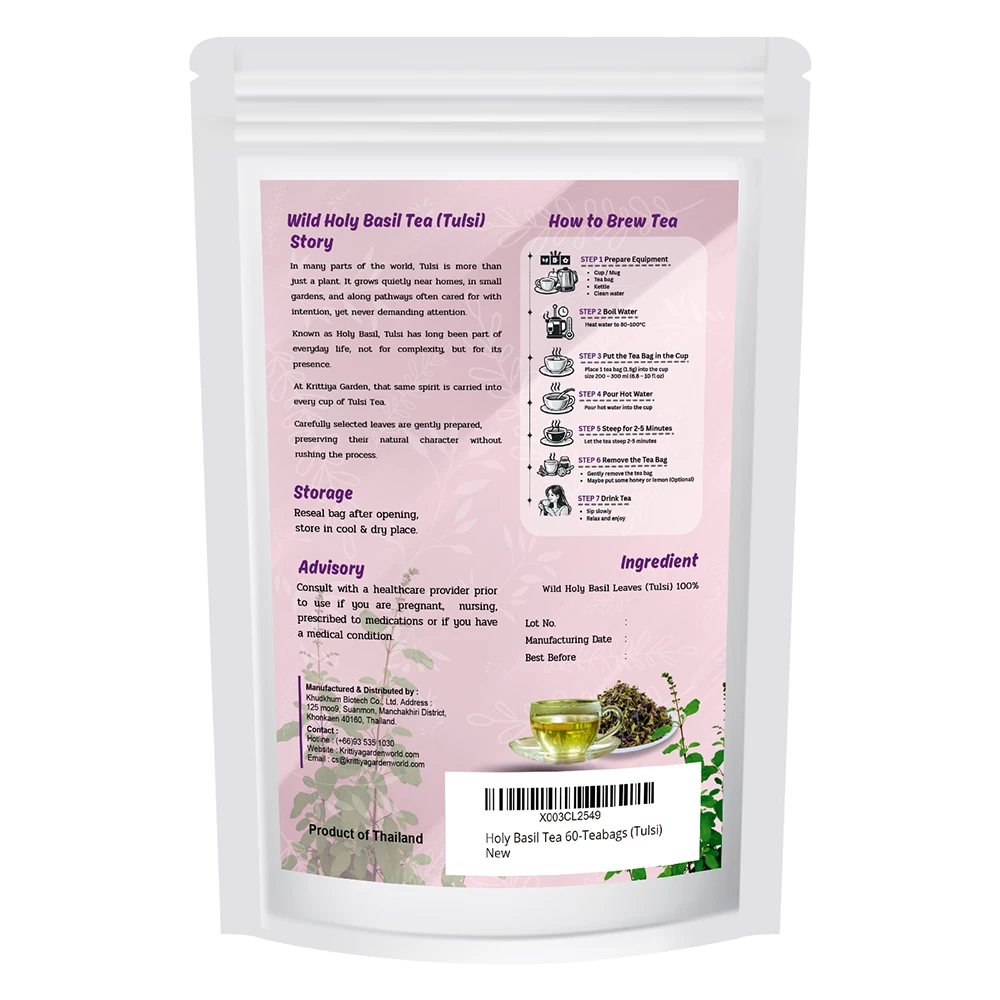
1. Place one tea bag in your cup
Use one Holy Basil Tea bag per serving.
2. Add hot water
Pour approximately 200–250 ml (7–8 fl oz) of freshly heated water over the tea bag.
3. Steep for 3–5 minutes
Allow the aromatic character of the Holy Basil to develop.
4. Adjust to your preference
For a lighter, more delicate cup, shorten the steeping time. For a deeper and more aromatic herbal character, steep slightly longer.
5. Remove the tea bag and enjoy
Enjoy warm on its own or according to personal preference.
Serving Suggestion
For a softer flavour, add a small amount of honey after brewing.
A slice of fresh lemon or lime can also complement Holy Basil's naturally aromatic character.
Iced Holy Basil Tea
Brew slightly stronger than usual, allow the infusion to cool and serve over ice.
Brewing Tip
Because Holy Basil is naturally aromatic, avoid judging the tea only by colour. Its distinctive experience comes largely from the aroma and herbal flavour released during brewing.
Frequently Asked Questions
What is Holy Basil Tea?
Holy Basil Tea is an herbal infusion prepared from Holy Basil, commonly known as Tulsi and botanically identified as Ocimum tenuiflorum.
Is Holy Basil the same as Tulsi?
Yes. Tulsi is the name widely used for Holy Basil, particularly in India and Ayurvedic traditions.
What is the scientific name of Holy Basil?
The accepted botanical name is Ocimum tenuiflorum. The name Ocimum sanctum is also widely encountered as a synonym.
Is Holy Basil the same as Thai Basil?
No. Holy Basil (Ocimum tenuiflorum) and Thai basil (commonly Ocimum basilicum var. thyrsiflora) are different plants with different aromatic profiles.
Is Holy Basil the same plant used in Thai Pad Krapow?
Holy basil, known in Thai as กะเพรา (kaphrao/kaprao), is traditionally associated with dishes such as Pad Krapow. This tea provides a very different way to experience the plant—as an herbal infusion rather than as a culinary herb.
Does Holy Basil Tea contain caffeine?
Pure Holy Basil Tea is naturally caffeine-free because it does not contain conventional tea leaves from Camellia sinensis.
What does Holy Basil Tea taste like?
It has a distinctive herbal and aromatic flavour with warm, gently spicy and slightly peppery notes. Its flavour is very different from conventional black or green tea.
How do I brew Holy Basil Tea?
Steep one tea bag in approximately 200–250 ml of hot water for around 3–5 minutes. Adjust according to your preferred strength.
Can Holy Basil Tea be served cold?
Yes. Prepare a slightly stronger infusion, allow it to cool and serve over ice.
How many tea bags are included?
Each package contains 60 individual tea bags.
Where is Krittiya Garden Holy Basil Tea made?
Krittiya Garden Holy Basil Tea is crafted in Thailand.
What natural compounds are found in Holy Basil?
Holy basil contains numerous naturally occurring phytochemicals, including phenolic, flavonoid and volatile aromatic compounds. Their exact amounts depend on factors such as cultivar, plant part, growing conditions and processing.
Is Holy Basil an adaptogen?
Holy Basil is frequently described in contemporary wellness literature as an “adaptogenic” herb, and research has investigated certain Holy Basil preparations in relation to stress. However, “adaptogen” should not be interpreted as proof that an ordinary cup of Holy Basil Tea treats stress, anxiety or other medical conditions.
Does Holy Basil Tea reduce stress?
Some research has investigated specific Holy Basil preparations in relation to perceived stress and related outcomes. However, differences in preparation, concentration and dose mean those results cannot automatically be applied to this tea. Krittiya Garden does not present Holy Basil Tea as a treatment for stress or anxiety.
Does Holy Basil Tea lower blood sugar?
Holy Basil preparations have been studied in research involving glucose metabolism. This does not establish that ordinary Holy Basil Tea treats diabetes or reliably lowers blood glucose, and it should not replace prescribed treatment.
Can I drink Holy Basil Tea every day?
Follow the serving instructions on the final product packaging. There is no single amount appropriate for everyone, and consuming more does not necessarily provide greater benefit.
Can pregnant or breastfeeding women drink Holy Basil Tea?
Because safety evidence for regular medicinal-style use during pregnancy and breastfeeding is limited, pregnant or breastfeeding customers should consult an appropriate healthcare professional before regular use.
Can I drink Holy Basil Tea while taking medication?
People taking prescription medication or managing a medical condition—particularly those using medicines affecting blood glucose or blood clotting—should seek appropriate professional advice before regular medicinal-style use of Holy Basil products.
Is Holy Basil Tea a medicine?
No. Krittiya Garden Holy Basil Tea is offered as a botanical herbal beverage and is not intended to diagnose, treat, cure or prevent disease.
Reviews
There are no reviews yet.