Description
Dried Galangal Root — The Distinctive Aroma of Thai Cuisine
There are ingredients that add flavour.
And then there are ingredients that give a cuisine its identity.
Galangal is one of them.
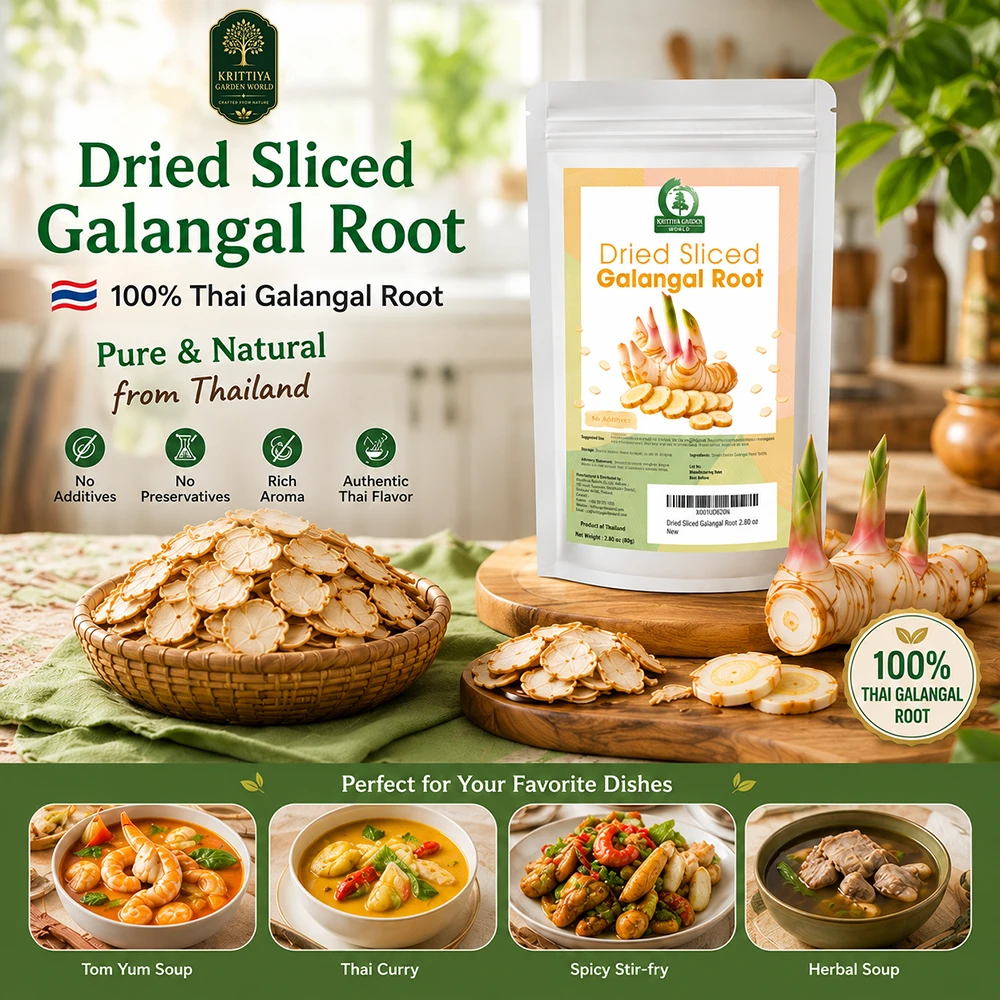
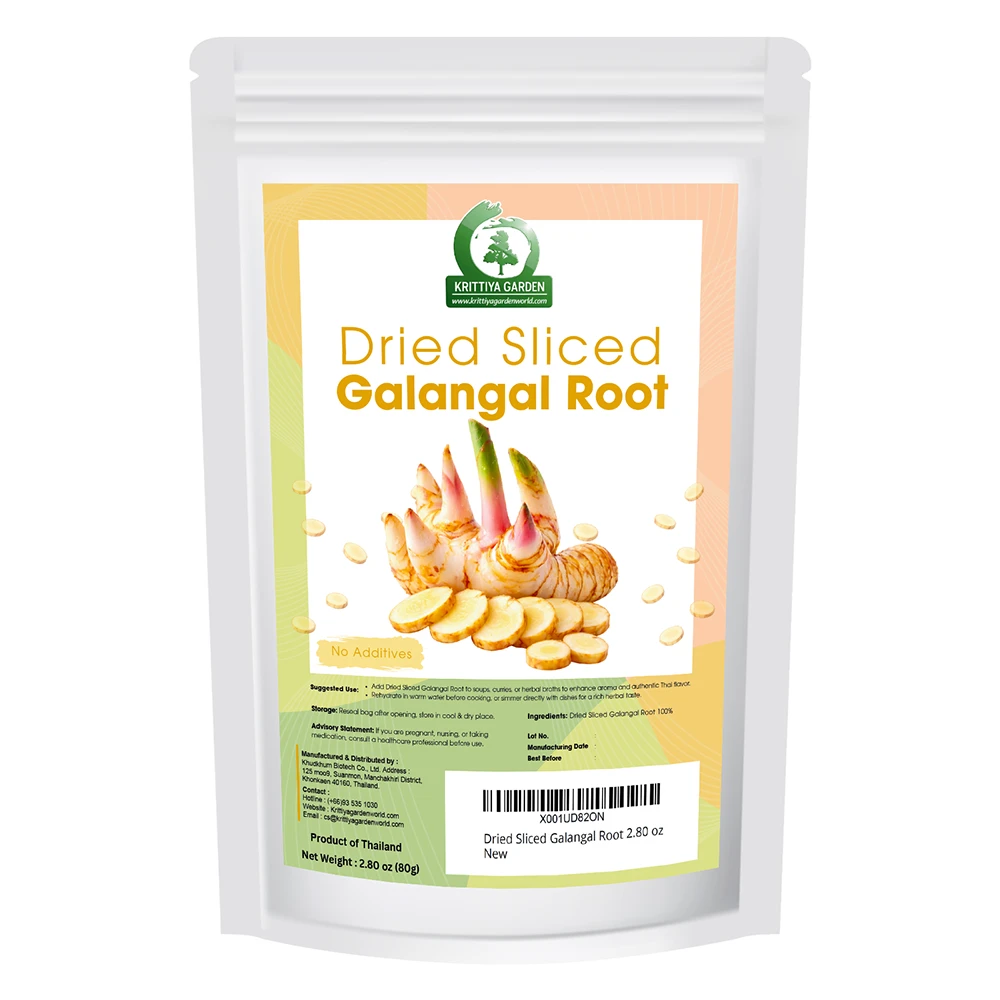
Krittiya Garden Dried Sliced Galangal Root brings the unmistakable aromatic character of this celebrated Southeast Asian rhizome to kitchens around the world.
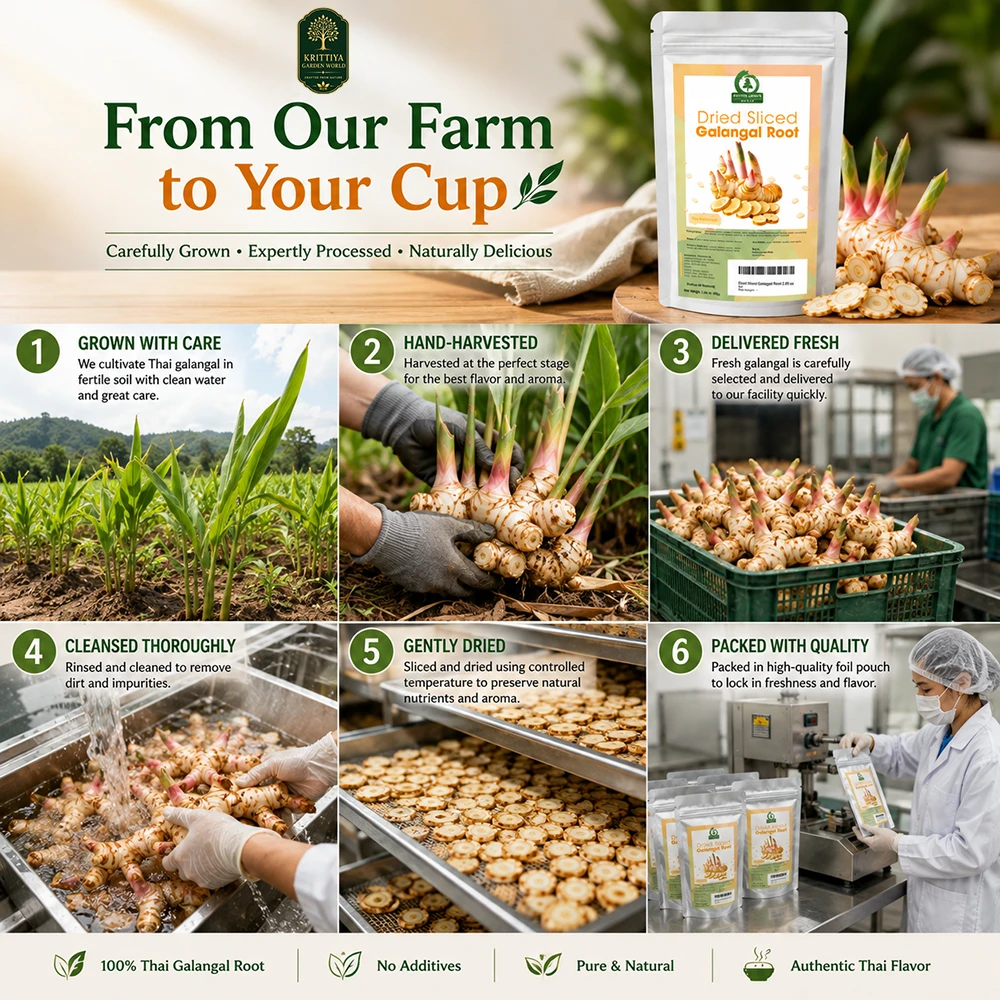
Carefully sliced and dried for convenient storage, galangal develops a distinctive combination of warm, citrusy, peppery, woody and gently spicy notes.
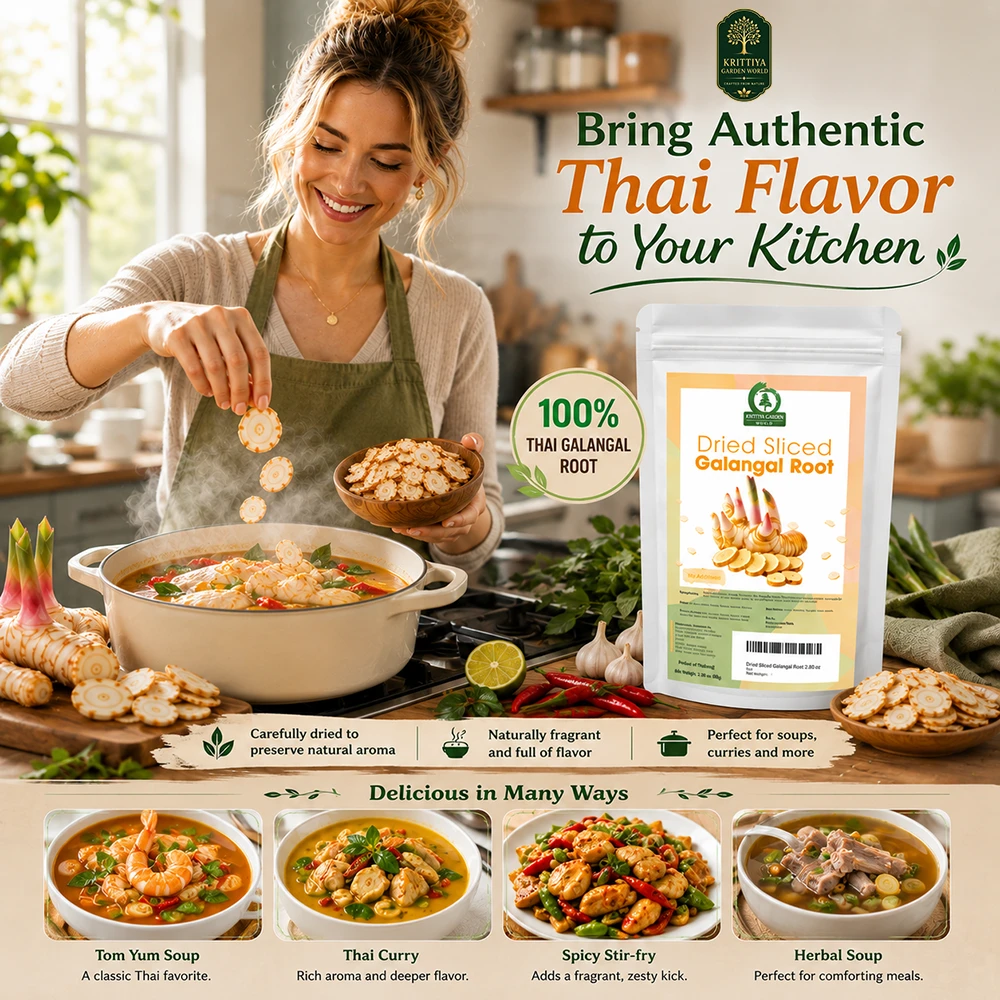
From the fragrant broth of Tom Yum to the creamy complexity of Tom Kha, galangal is one of the botanicals that makes Thai food unmistakably Thai.
What Is Galangal?
Galangal is an aromatic rhizome belonging to the Zingiberaceae, or ginger family.
The greater galangal commonly associated with Thai cuisine is Alpinia galanga.
Although galangal and ginger are relatives, they are not the same ingredient.
Galangal has a firmer texture and a distinctly sharper, more citrusy, pine-like and peppery aromatic profile than ordinary ginger.
Botanical Information*
Common Name: Galangal / Greater Galangal
Thai Name: Kha (ข่า)
Botanical Name: Alpinia galanga
Family: Zingiberaceae
Plant Part Used: Rhizome
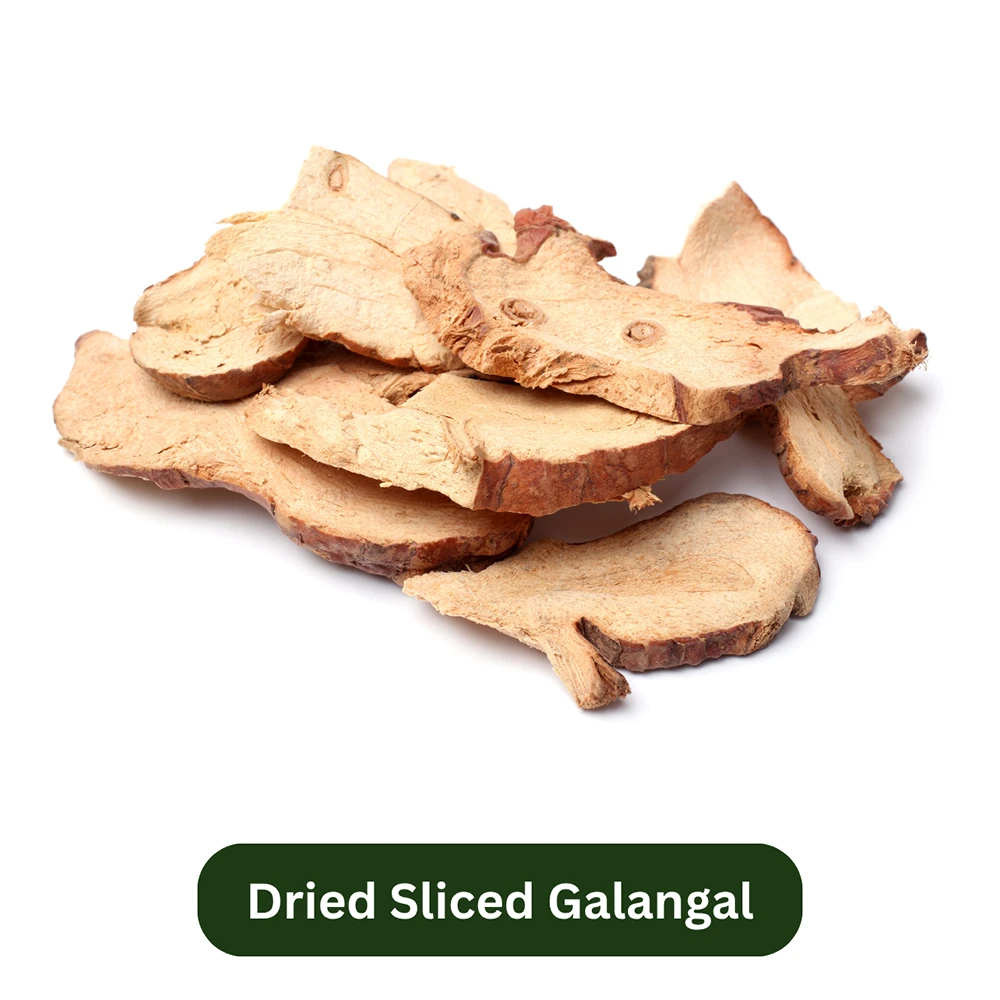
Form: Dried Slices
Product Type: Culinary Botanical
*Use the botanical name only after confirming the actual species from the supplier specification or COA.
What Does Galangal Taste Like?
Galangal has a complex aromatic profile that distinguishes it from ginger.
It can generally be described as:
Citrusy • Peppery • Woody • Earthy • Warm • Aromatic • Gently Spicy
Dried galangal tends to have a concentrated, warm botanical character and can be rehydrated or simmered directly in soups and broths.
Its purpose is not simply to make food “spicy.”
Galangal contributes aroma, depth and identity.
Galangal vs. Ginger — Are They the Same?
No.
This is one of the most useful FAQ/SEO topics for international customers.
Both belong to the Zingiberaceae family, but they are different botanicals.
Galangal has a sharper, more citrusy, peppery and sometimes pine-like character.
Ginger generally has a warmer, sweeter and more familiar pungency.
Substituting ginger for galangal may create a tasty dish, but it will not produce the same aromatic profile, particularly in recipes such as Tom Kha.
An Essential Botanical in Thai Cooking
Galangal is closely associated with Thai and Southeast Asian cuisine.
It is particularly important in:
Tom Yum • Tom Kha • Thai Curry Pastes • Soups • Broths • Seafood Dishes • Stir-Fries
It is frequently used alongside other aromatic Thai botanicals such as:
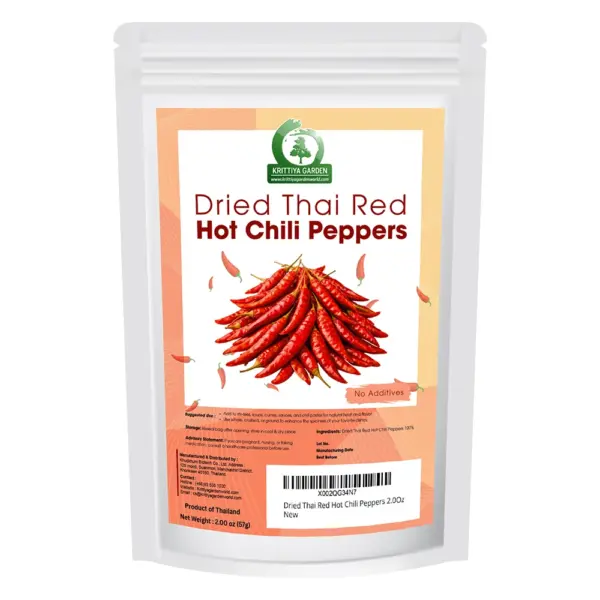
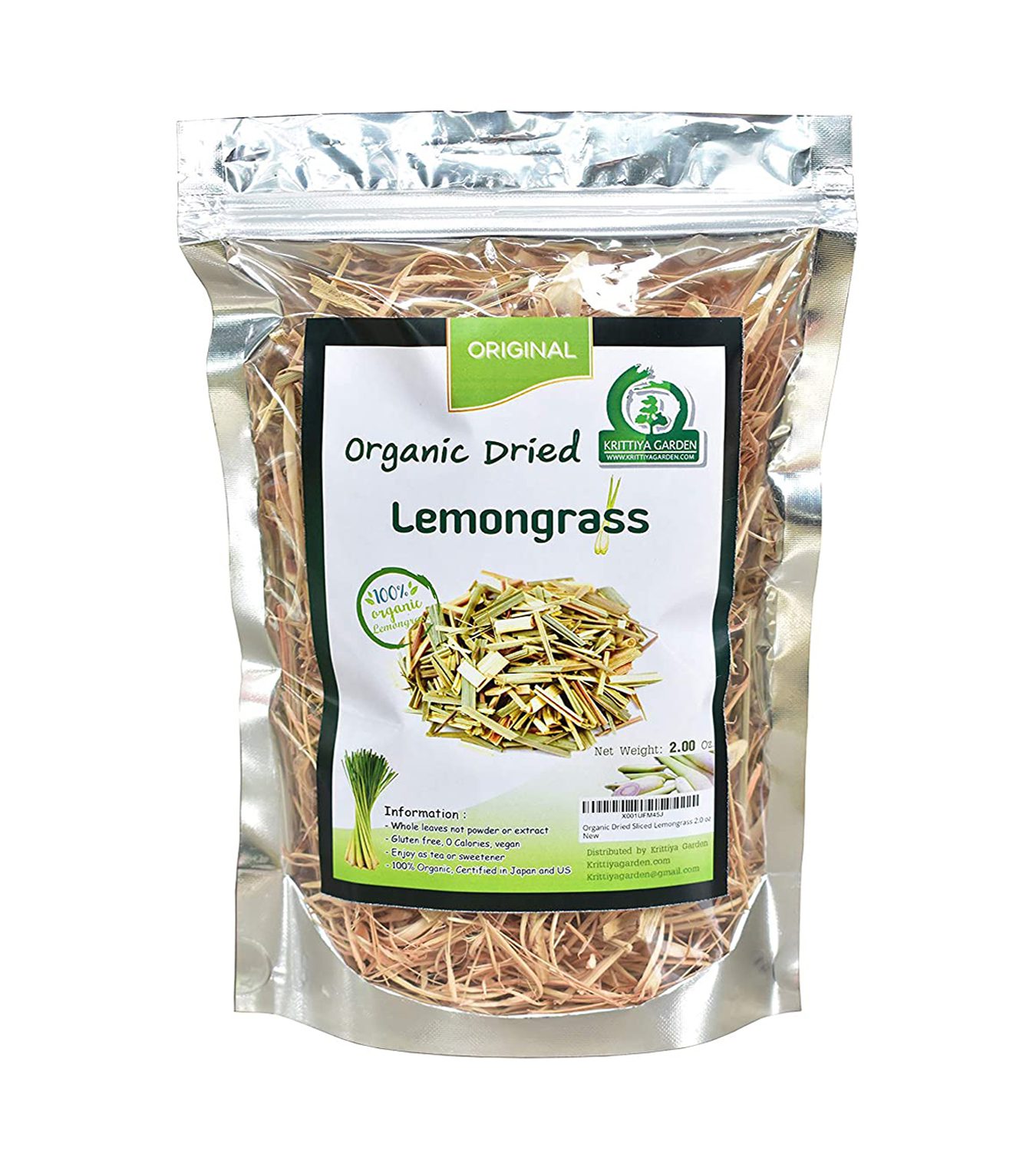
Lemongrass • Makrut Lime Leaves • Chili • Garlic • Shallots
Together, these ingredients form some of the most recognisable aromatic foundations of Thai cooking.
Why Dried Galangal?
Fresh galangal is not always easy to find outside Southeast Asia.
Dried sliced galangal provides a practical pantry alternative that can be stored and used when needed.
Convenient
Already sliced and ready for rehydrating or simmering.
Shelf-Friendly
A practical way to keep galangal available in the pantry.
Versatile
Suitable for soups, broths, curries and other culinary preparations.
Naturally Aromatic
Retains the distinctive botanical character that makes galangal recognisable.
Galangal Beyond the Kitchen
Galangal also has a long history in traditional botanical practices across Asia.
Modern research has investigated various constituents and extracts of Alpinia galanga for a range of biological activities.
However, laboratory findings involving extracts, essential oils or isolated compounds should not automatically be interpreted as evidence that ordinary dried galangal or Galangal Tea prevents or treats disease.
For Krittiya Garden, galangal is first and foremost something extraordinary in its own right:
a distinctive botanical with deep roots in Thai culinary heritage.
Why Choose Krittiya Garden Dried Sliced Galangal Root?
- Carefully sliced dried galangal
- Distinctive Thai botanical aroma
- Convenient pantry format
- Easy to rehydrate
- Suitable for soups, curries and broths
- No added colours*
- No artificial flavourings*
- No added sugar*
- Net Weight: 2.8 oz (79.4 g)
- Product of Thailand*
From Thailand to Kitchens Around the World
To understand Thai food, you have to understand its aromatics.
Lemongrass brings brightness.
Chili brings heat.
Makrut lime brings fragrance.
Galangal brings a character that cannot quite be replaced.
Warm, citrusy, peppery and unmistakably Southeast Asian.
KRITTIYA GARDEN — CRAFTED FROM NATURE
Ingredients
100% Dried Sliced Galangal Root*
Carefully sliced and dried galangal rhizome for culinary use.
Product Information
Ingredient: Dried Galangal Root
Thai Name: Kha (ข่า)
Botanical Name: Alpinia galanga*
Family: Zingiberaceae
Plant Part Used: Rhizome
Form: Dried Slices
Net Weight: 2.8 oz (79.4 g)
Product of Thailand*
Product Features
- Sliced and dried galangal
- Plant-based culinary ingredient
- Naturally aromatic
- No added colours*
- No artificial flavourings*
- No preservatives*
How to Use Dried Sliced Galangal
Dried galangal is a versatile aromatic ingredient widely used in Thai and Southeast Asian cooking. Its distinctive warm, peppery, citrusy and slightly woody character adds depth and authentic aroma to soups, curries, broths and curry pastes.
Rehydrate Before Cooking
For recipes that require softer galangal, place the dried slices in warm water and soak for approximately 15–30 minutes, or until softened.
Drain before adding to your recipe.
Rehydrating is especially useful when using dried galangal in curry pastes, sauces or dishes where the ingredient needs to be processed or pounded.
For Tom Yum
Add dried galangal slices directly to the broth together with other classic Thai aromatics such as:
Lemongrass • Makrut Lime Leaves • Chili • Shallots
Allow the galangal to simmer in the broth so that its distinctive aroma and flavour can infuse into the soup.
The galangal slices are generally used to flavour the broth and may remain firm or fibrous after cooking, so they do not necessarily need to be eaten.
For Tom Kha
Galangal is one of the defining ingredients of Tom Kha, the famous Thai coconut soup.
Add the dried galangal to the liquid and gently simmer it with lemongrass and makrut lime leaves before or while adding the other ingredients according to your recipe.
Allowing sufficient simmering time helps release the characteristic warm, citrusy and peppery aroma that gives Tom Kha its distinctive identity.
For Thai Curries
Dried galangal can be used to add aromatic depth to Thai curries.
Depending on the recipe, either:
Rehydrate the slices before preparing a curry paste, or add the dried slices directly to a curry or broth when they are being used primarily to infuse flavour.
For Curry Paste
When making homemade Thai curry paste:
- Soak the dried galangal slices in warm water until softened.
- Drain thoroughly.
- Cut into smaller pieces if necessary.
- Pound or process with the other curry-paste ingredients.
Galangal pairs naturally with ingredients such as lemongrass, chili, garlic, shallots, makrut lime zest and aromatic spices, depending on the type of curry paste being prepared.
For Soups & Broths
Add several slices to soups, stocks or broths during cooking and allow them to simmer with the other ingredients.
The longer galangal is allowed to infuse gently, the more its aromatic character can become part of the broth.
Remove the slices before serving if preferred.
For Stir-Fries & Other Dishes
Rehydrate the dried galangal until softened, then slice or chop into smaller pieces as required by the recipe.
Because dried galangal can remain considerably firmer than fresh galangal, rehydrating before stir-frying is recommended.
Cooking Tip
Galangal is an aromatic ingredient rather than simply a source of heat.
For the most authentic Thai flavour, use it alongside complementary botanicals such as:
Lemongrass + Makrut Lime Leaves + Chili
Together, these ingredients create the distinctive aromatic foundation found in many traditional Thai dishes.
Important
Galangal is not the same as ginger.
Although both belong to the ginger family, galangal has a distinctly different aroma — more citrusy, peppery, woody and aromatic. Ginger can change the character of a dish and is not an exact substitute for galangal, particularly in recipes such as Tom Kha where galangal is a defining ingredient.
Perfect for:
Tom Yum • Tom Kha • Thai Curries • Curry Pastes • Soups • Broths • Sauces • Southeast Asian Cooking
Frequently Asked Questions
What is dried galangal?
Dried galangal is fresh galangal that has been sliced and carefully dried for convenient storage and culinary use. It is a distinctive aromatic ingredient widely used in Thai and Southeast Asian cuisine, especially in soups, curries, broths and curry pastes.
What does galangal taste like?
Galangal has a distinctive warm, peppery, citrusy, woody and aromatic character. Its flavour is sharper and more aromatic than ginger, with subtle pine-like and earthy notes.
Is galangal the same as ginger?
No. Although galangal and ginger belong to the same botanical family, they are different ingredients.
Galangal has a more citrusy, peppery and aromatic profile, while ginger tends to have a warmer, sharper and slightly sweeter pungency.
For authentic Thai dishes such as Tom Kha, ginger is not an exact substitute for galangal.
What is galangal called in Thailand?
Galangal is called “Kha” (ข่า) in Thai.
It is one of the most important aromatic ingredients in Thai cuisine and is the ingredient behind the word “Kha” in Tom Kha.
What dishes can I make with dried galangal?
Dried galangal can be used in a wide variety of Thai and Southeast Asian dishes, including:
Tom Yum • Tom Kha • Thai Curries • Curry Pastes • Soups • Broths • Sauces • Seafood Dishes
It works particularly well when combined with other Thai aromatics such as lemongrass, makrut lime leaves, chili, garlic and shallots.
Can I use dried galangal for Tom Yum?
Yes. Galangal is one of the classic aromatics used in Tom Yum.
Add the dried slices to the broth and simmer them together with ingredients such as lemongrass and makrut lime leaves to release their aroma and flavour.
Can I use dried galangal for Tom Kha?
Yes. In fact, galangal is a defining ingredient of Tom Kha.
The word “Kha” (ข่า) means galangal in Thai. Its distinctive aromatic character is an essential part of the flavour profile of this traditional Thai coconut soup.
Do I need to soak dried galangal before cooking?
It depends on how you plan to use it.
For soups and broths, dried galangal slices can generally be simmered directly in the cooking liquid.
For curry pastes, stir-fries or recipes where the galangal needs to be chopped, pounded or processed, rehydrating the slices in warm water first can help soften them and make them easier to work with.
How long should I soak dried galangal?
As a general culinary guideline, soak the dried slices in warm water for approximately 15–30 minutes, or until sufficiently softened for your recipe.
The actual time may vary depending on the thickness and dryness of the slices.
Can I add dried galangal directly to soup?
Yes. Dried galangal can be added directly to soups, broths and curries when its primary purpose is to infuse the dish with aroma and flavour.
Allow the slices to simmer with the other ingredients during cooking.
Do I eat the galangal slices in Tom Yum or Tom Kha?
Usually, the slices are primarily used to infuse the broth with flavour and aroma.
Galangal is naturally firm and fibrous, and dried galangal may remain quite tough even after simmering. It is therefore common to leave the slices in the dish for aroma but not necessarily eat them.
Can dried galangal be used to make Thai curry paste?
Yes. Rehydrate the dried galangal until softened, drain it well and cut it into smaller pieces before pounding or processing it with the other curry-paste ingredients.
Depending on the recipe, galangal may be combined with ingredients such as dried chilies, lemongrass, garlic, shallots, makrut lime zest and spices.
Can I use dried galangal instead of fresh galangal?
Yes, dried galangal can be a convenient alternative when fresh galangal is unavailable.
However, fresh and dried galangal have somewhat different aromatic intensity and texture, so the quantity may need to be adjusted according to the recipe and personal preference.
Can I substitute ginger for galangal?
You can use ginger when galangal is unavailable in some recipes, but the flavour will not be the same.
For dishes where galangal is central to the recipe—especially Tom Kha—using actual galangal will provide a more authentic Thai flavour.
Is dried galangal spicy?
Galangal has a naturally peppery and pungent character, but it does not produce the same type of heat as chili peppers.
Its role in Thai cooking is primarily to provide aroma, freshness and complexity, rather than intense chili heat.
What ingredients pair well with galangal?
Galangal pairs especially well with classic Thai aromatics such as:
Lemongrass • Makrut Lime Leaves • Chili • Garlic • Shallots • Coconut Milk • Lime • Fish Sauce
The combination of galangal + lemongrass + makrut lime leaves is particularly characteristic of Thai soups such as Tom Yum and Tom Kha.
Is “galangal root” botanically a root?
Despite the common English name “galangal root,” the edible underground portion of the plant is botanically a rhizome, an underground stem.
“Galangal Root” remains the familiar culinary and commercial term used by many consumers.
What is the botanical name of galangal?
Greater galangal commonly used in Thai cuisine is Alpinia galanga, a member of the ginger family (Zingiberaceae).
For the product page, the botanical name should only be stated if the species of the actual product has been confirmed by the supplier or product specification.
How much galangal is in each package?
Each package contains 2.8 oz (approximately 79.4 g) of dried sliced galangal.
Is this product from Thailand?
If confirmed by the product specification, it can be described as Product of Thailand.
How should I store dried galangal?
Keep the package tightly sealed in a cool, dry place, away from direct sunlight, heat and moisture.
Proper storage helps preserve the dried galangal's characteristic aroma, flavour and quality.
Is dried galangal ready to use?
Yes. The galangal has already been sliced and dried for convenient culinary use.
Depending on your recipe, you can either add the slices directly to soups and broths or rehydrate them before chopping, pounding or processing.
What makes galangal important in Thai cooking?
Galangal contributes a distinctive aroma that is difficult to reproduce with other ingredients. Together with botanicals such as lemongrass, makrut lime leaves and chili, it forms part of the aromatic foundation of many iconic Thai dishes.
It is not simply a spice that adds heat—it is one of the ingredients that gives Thai cuisine its unmistakable character.

4 reviews for Dried Sliced Galangal Root – Thai Culinary Botanical, 2.8 oz
There are no reviews yet.